
Blogpost
Published: 5 November, 2026
Written by Alys Kay, Research Culture Coach and Consultant
Across the Universities of Leeds, Sheffield and York, an average of 200 research staff take an extended period of parental leave each year. Returning to research is a critical career moment, when confidence, progression and retention can be strengthened or lost.
Supporting researchers returning from parental leave is a project funded by the White Rose University Consortium, co-led by Alys Kay and Dr Sarah Penny, Researcher Developer at the University of York.
The purpose of this project is to examine effective, no-cost ways to make that return smoother and more successful. It examines existing practice across the partnership and approaches from the wider sector, and works directly with researchers who are returning or have recently returned from leave.
What happens when a researcher returns from parental leave?
Their manager is supportive, and the university has policies, guidance and specialist services. But their research has not stood still.
A grant could be approaching its end. Collaborations could have moved on. Experiments may be restarting. Their next contract may be uncertain.
HR can advise on employment. Research finance understands funding conditions. Their principal investigator knows the project. Researcher development colleagues can support career planning.
Each holds part of the answer. Who makes the answers work together?
This question sits at the heart of supporting researchers returning from parental leave.
It also illustrates why White Rose’s strategic ambitions to develop people, strengthen collaboration and create wider impact are connected.
Supporting research careers requires more than individual development opportunities. It also means examining the institutional conditions that enable researchers to pursue them.
And it raises a wider challenge for research culture: how do we move from understanding institutional problems to changing the arrangements that produce them?
Key research findings
Our research involved interviewing 20 returning researchers and eight line managers, alongside cross-role case clinics and workshops.
One finding was particularly revealing: returning researchers do not all return to the same research circumstances, or face the same challenges in re-establishing their work.
A postdoctoral researcher approaching the end of a fixed-term grant, a fellow rebuilding an independent research programme and an academic renegotiating teaching responsibilities face very different challenges.
These differences are not simply personal. They reflect how research is organised, funded and managed.
We also found considerable expertise and support already existed. The difficulty was often making that support visible, connected and usable when it mattered.
In case clinics, colleagues from different institutional functions worked through composite scenarios developed from the interviews. These conversations became part of the inquiry itself, revealing dependencies and challenging assumptions about how institutional processes worked.
A seemingly straightforward funding question, for example, could have consequences for employment, project continuity and career progression.
What appeared manageable from one organisational perspective became more complicated when viewed across the researcher’s whole journey.
This led us to explore what we call institutional reintegration capability: an institution’s ability to anticipate, coordinate and adapt its existing expertise, policies and resources around different research circumstances.
The question was no longer simply what support universities provided, but how well that support worked together.
Universities organise expertise into functions
Returning researchers experience that expertise as a journey.
HR, research finance, research management and researcher development each have legitimate responsibilities. But a researcher’s problem may not fit neatly within any one of them.
Service design offers a way to examine the experience across those boundaries: where information is exchanged, decisions are made, responsibility changes hands and people are left to connect the pieces themselves.
Consider a researcher asking whether an extension to their grant also protects their employment.
Research finance understands the funder’s conditions. HR understands contractual implications. The principal investigator understands the project’s staffing requirements.
All three might give accurate advice. Yet the researcher could still be left trying to reconcile the answers.
The question changes from Does each service provide appropriate support? to Can the institution make that support work together when someone needs it?
Researchers differ in their institutional knowledge, professional networks, employment security and ability to navigate complex organisations.
Different circumstances require different responses. They should not require different levels of luck.
Better coordination cannot create funding that doesn’t exist or remove every structural constraint. But it can clarify responsibilities, identify problems earlier and reduce unnecessary work for researchers and managers.
From insight to action
Understanding a problem is not the same as changing the conditions that produce it.
Our findings suggest three practical approaches to improve the experience for research returners across institutions.
Design it. Where possible, change an existing process so that action doesn’t depend on someone individually recognising a problem. Could a return notification routinely prompt a research-focused conversation?
Make it navigable. Where complexity cannot be removed, make the route to expertise clearer. A manager shouldn’t need to understand employment law and research funding to know whom to involve.
Create a place to notice. Some difficulties only become visible through conversation. Where can changing circumstances be identified and acted upon before they become crises?
These are different design responses, not a single solution. Which is appropriate depends on the problem and the institutional context.
To help examine how existing arrangements work, we also developed four connected functions:
NOTICE → CONNECT → ACT → REVISIT
Notice what needs attention. Connect the relevant expertise. Establish who can act. Revisit arrangements to see whether they work.
The aim isn’t more activity. It’s better-connected activity.
Three universities, one opportunity
The supporting researchers returning from parental leave project is moving into an 18-month implementation and learning phase across the Universities of Leeds, Sheffield and York.
The ambition isn’t to create another support service or impose identical procedures. Each university retains responsibility for its own decisions and arrangements.
Instead, we’re exploring how institutions can investigate shared problems, develop practical responses and learn from one another.
This is where a university partnership offers something distinctive.
Individual institutions can improve their own arrangements. Together, they can compare different contexts, test explanations, examine what transfers and avoid repeatedly solving similar problems in isolation.
The partnership becomes a way to develop and test change, not simply exchange good practice.
The supporting researchers returning from parental leave project is funded by the White Rose University Consortium and co-led by Alys Kay, Research Culture Consultant, and Dr Sarah Penny, Researcher Developer at the University of York, working with colleagues across Leeds, Sheffield and York.
Get involved
Are you a returner, or a line manager of one? Do you work in HR, researcher development or research management? Tell us about your experience or help us to identify and test low-cost changes.
Get in touch at info@whiterose.ac.uk to explore how you can work with us.
Related news
See all news
Blogpost
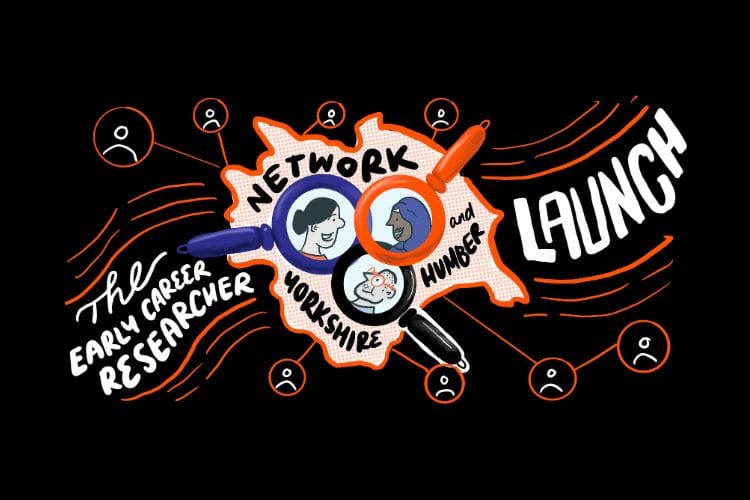
A visual summary of the launch of the British Academy ECRN Yorkshire and Humber Cluster
We were delighted to have Laura Evans-Hill from Nifty Fox to live scribe the launch of the British...
Blogpost

How Sheffield’s staff networks are building an inclusive university from the inside out
Across our three partner universities, we all face the same core challenge of keeping Equality, Diversity, and Inclusion...
Blogpost

Tackling accent bias: Interview with Dr Gisela Tomé Lourido
You might think that prejudice based on how someone speaks is a relic of the past, but the...
Blogpost

Spotlight on the Yorkshire Technician Exchange Partnership
Last week, more than 70 technicians from across Yorkshire came together at the relaunch of the Yorkshire Technician...
Sign up to our newsletter
The White Rose University Consortium actively engages with institutional, regional and national partners to propel positive change and create sustained impact for individuals, communities, and the region.


