
Blogpost
Published: 16 March, 2026
Research is a team endeavour, involving not just named authors, but a wide range of colleagues whose contributions to data, equipment, methodology and more are essential to the final output. Yet traditional approaches to authorship often leave these contributions invisible.
The University of Sheffield has been working to change that, using the Contributor Role Taxonomy (CRediT) to ensure that all significant contributors to research – including research technical professionals – are recognised in a consistent and transparent way.
We spoke to Dr Holly Ranger, Head of Open Research, and Kathrine Jensen, Strategic Projects Officer in the Research, Partnerships and Innovation team about the project, what they have learned, and what it means for technicians and the wider research community.
Setting the scene
The Contributor Role Taxonomy (CRediT) is a standardised, 14-role framework designed to capture the diverse contributions made to scholarly outputs, from data curation and formal analysis to supervision and writing. It sits alongside (rather than replacing) traditional authorship, allowing contributions from academics and non-academic staff alike to be named and credited transparently.
Sheffield’s use of CRediT is embedded across several institutional commitments, including its Good Research and Innovation Practices (GRIP) policy, its Technician Commitment Action Plan, and its Research Culture Action Plan, which includes a specific objective (1.3.2) to ensure all significant contributions are recognised regardless of whether the contributor is in an academic or non-academic role.
CRediT has been around for a few years now, but uptake across the sector has been uneven. What prompted Sheffield to make this a priority – and why does it matter particularly for technical staff?
In attempting to open up or demystify the research process and the range of contributors and contributions that underpin research publications, our work around contribution and attribution practices brings together three key strands of work at the university: research integrity, open research, and professional satisfaction. That has helped us get senior buy-in for the project.
In addition to that, it is increasingly common that academics are asked to complete contributor information, using the CRediT roles, when submitting manuscripts to journals, so it seemed that the time was right for an intervention – using CRediT as a jumping off point for broader conversations around authorship and contributorship.
The work is particularly important for technical staff because they are often perceived as ‘service providers’ rather than contributors to research, despite the fact that there are many research technicians writing software, designing and building novel instruments and hardware, or devising feasibility studies that underpin grant applications, for instance.
Given the primacy of the published research output in the scholarly ecosystem, it is especially important that such contributions are acknowledged in publications, regardless of whether the contributions or contributors meet the criteria for ‘authorship’.
We don’t want to create a situation where Technicians are expected to have research publications on their CV in order to progress in their career, but we do want to challenge the idea that Technicians ‘don’t need’ publications and so therefore don’t need to be credited for their contributions.
The first phase of the project involved running workshops with research technicians to generate real-life examples of technical contributions. What did you learn from those conversations – and did anything surprise you about how technicians described their own work?
The workshops really showed the ingenuity, expertise, range, commitment, and passion of Sheffield’s technicians. The examples of ‘things that Technicians do’ generated in the workshop also demonstrated clearly the vital importance of technical staff to health and safety and their role as a key repository of institutional knowledge. The Technical staff also discussed the embodied, experiential knowledge that Technicians hold about what does and does not work in the lab.
One favourite example was from the Technician who worked out playing Japanese pop music increased the reproduction rate of the lab mice. We use this example partly because it’s so memorable, but also because it highlights how hard it is to capture Technicians’ non-digital contributions to research. CRediT is not a panacea for the challenges that technical staff face around recognition and institutional visibility, but we are hoping the project stimulates broader conversations around attribution and contributorship.
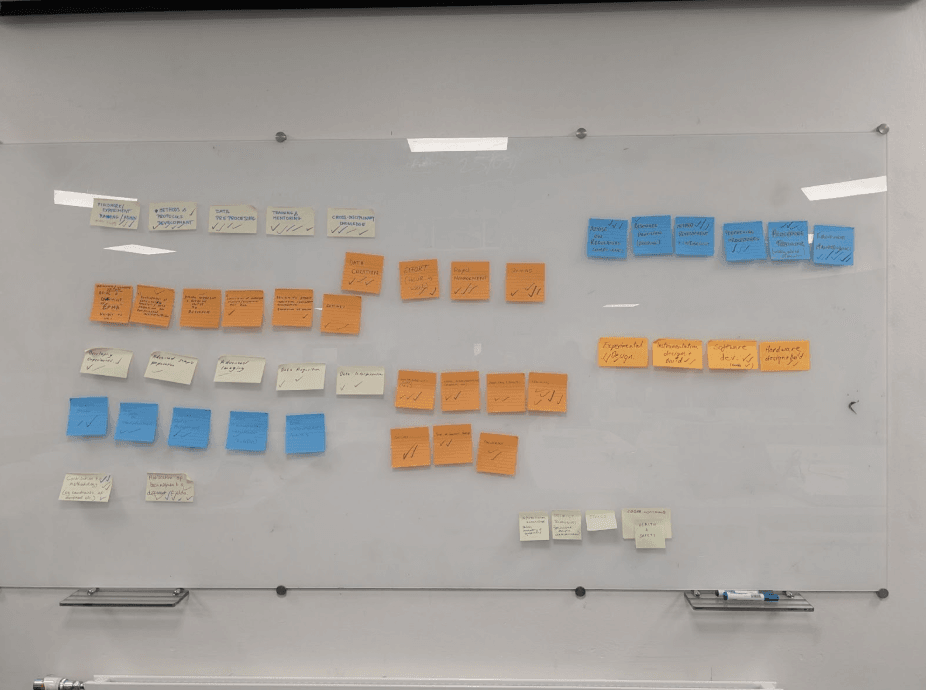
In a workshop held in June 2025, Sheffield Technicians provided examples of their daily job tasks and contributions to research projects. These were then mapped to the 14 CRediT roles.
A follow-on project is supporting the development of training for authors and contributors, surveying current practice across disciplines, and publishing good practice case studies. Which of these do you think will make the biggest difference in shifting behaviour and how can staff get involved?
It is necessary to have a range of approaches and support in place to change behaviour. However, it is a crucial step to have real examples of how colleagues are crediting colleagues who are contributing to data curation, research experiments, project administration, acquiring funding and more. Once you have examples you can then use them to raise awareness, develop training and build staff engagement in order to change behaviour.
Examples of senior academics and PIs modelling best practice in contribution and attribution will be key here; due to the power imbalances in the academy, it’s not going to be enough to advocate at the grassroots level, and showcasing the academics who are demonstrating leadership in this area will help us socialise and normalise contribution practices.
If you are interested in learning more about the project, we are planning an event on Weds 29 April, more details to follow. Please save the date and get in touch if you are interested in booking a place.
What would you say to colleagues at other institutions – including Leeds and York – who want to make CRediT work meaningfully for their technical staff? Where should they start?
A good starting point would be to establish the needs and motivations/aspirations of research technical professionals (and perhaps research enabling staff more generally) for the adoption and use of CRediT at their institutions. You could design a workshop to explore the scope and diversity of the contributions of research technical professionals and map this to the CRediT taxonomy.
We would be happy to support colleagues at Leeds and York in developing a workshop, and we have some materials that they could use for this purpose. The workshops were, in fact, inspired by York’s Fair Attribution Guidance and a desire to create our own examples.
What does success look like for this project in two or three years’ time? What would you want to be different for Sheffield’s technical staff?
In two or three years, it would be great to see a research culture where conversations about authorship and contributorship happen as part of research project development, and where it has become the norm to recognise a range of contributions as part of the research process and within outputs. We would like to be able to report an increase in research technicians and other Research Technical Professionals (librarians, research IT colleagues, PRISMS…) featured as contributors in research outputs.
We want to hear about your experience:
We are looking for potential collaborators to drive this work forward across the White Rose Consortium. We are interested in hearing from professional, technical, and academic staff, working across all disciplines (STEM, Arts & Humanities, and Social Sciences) who are currently supporting, using, or are interested in using CRediT and/or other contribution practices:
- Does CRediT help in recognizing the work of technical staff and early-career researchers at your institutions?
- How has CRediT changed institutional practices and conversations around ‘authorship’ and ‘contributorship’?
- What tools or support can we develop to make the process easier?
If you are interested in developing work around CRediT to attribute research-enabling staff across the White Rose universities, please get in touch at: rdm@sheffield.ac.uk.
We’ll also be hosting an in-person workshop at Sheffield on Wednesday 29th April to plan the next steps for the project, ideally across the White Rose universities – so please let Kathrine Jensen know if you would like to attend.
Useful links
- Contributor Role Taxonomy (CRediT)
- Sheffield CRediT guidance
- Sheffield Good Research and Innovation Practices (GRIP) Policy
- Sheffield Research Culture Action Plan
- CRediT Roles and Example Research Tasks
- Yorkshire Technician Exchange Partnership (YoTEP)
- Ranger, H. (2025, September 3). Recognising the contributions of Research Technical Professionals at the University of Sheffield. OpenFest 2025, Sheffield. Zenodo. https://doi.org/10.5281/zenodo.17047726
Related news
See all news
Blogpost

Designing research culture: reflections from our parental leave project
Across the three White Rose universities, around 200 research staff take an extended period of parental leave each...
Blogpost
Tackling accent bias: Interview with Dr Gisela Tomé Lourido
You might think that prejudice based on how someone speaks is a relic of the past, but the...
Blogpost
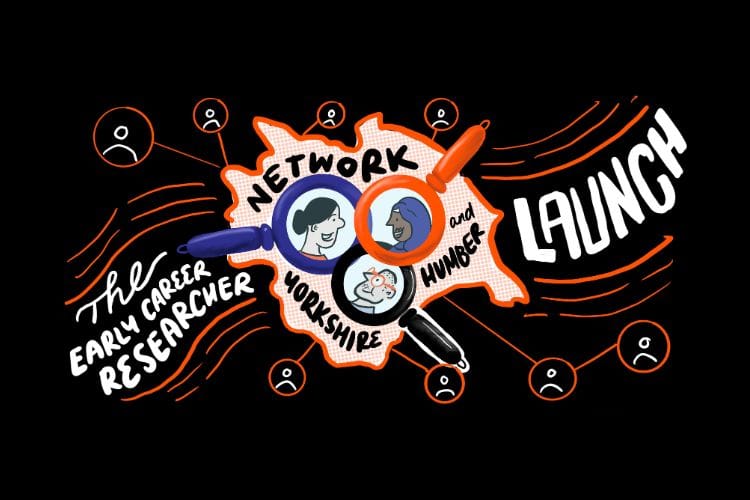
A visual summary of the launch of the British Academy ECRN Yorkshire and Humber Cluster
We were delighted to have Laura Evans-Hill from Nifty Fox to live scribe the launch of the British...
Blogpost

Spotlight on the Yorkshire Technician Exchange Partnership
Last week, more than 70 technicians from across Yorkshire came together at the relaunch of the Yorkshire Technician...
Sign up to our newsletter
The White Rose University Consortium actively engages with institutional, regional and national partners to propel positive change and create sustained impact for individuals, communities, and the region.


